




Comparison of the number of patients and age distribution ratios for designated intractable diseases in the 2021 FY(April 2021 to March 2022).
In recent years, there has been an increase in news about celebrities disclosing their intractable diseases, and as a result, the number of inquiries related to designated intractable diseases to our company has been on the rise, particularly concerning the flow of diagnosis and treatment procedures until the confirmation of the disease name.
Therefore, we have examined the number of patients for the top 10 diseases among people holding a certificate for specified disease treatment (designated intractable diseases)*¹ and the number of patients with each disease based on the disease name data in MDV and the notification number of the designated intractable disease*² in the hospitalization data (Form 1 file/FF1 file*³).
Reference:
*1 Source: 2021 FY intractable disease Information center “number of beneficiary certificate holders for specific disease treament”(designated intractable disease) (April 2021 to March 2022)
*2: Form 1 file/FF1 file contains individual patient information, such as consciousness status, date of birth, discharge destination, and diagnosis, summarized by the physician when the patient is discharged, similar to a “discharge summary.”
*3: The notification numbers for designated intractable diseases were added to Form 1 (FF1) files according to the “Survey on the Assessment of Effect by DPC for the FY 2016” explanatory material (revised on June 10, 2015).
Comparison of the number of patients with the top 10 diseases and MDV data (disease name data and data at the time of hospitalization) for the number of beneficiary certificate holders for specific disease treatment(designated intractable diseases).
MDV data: Data extraction period: April 2021 – March 2022
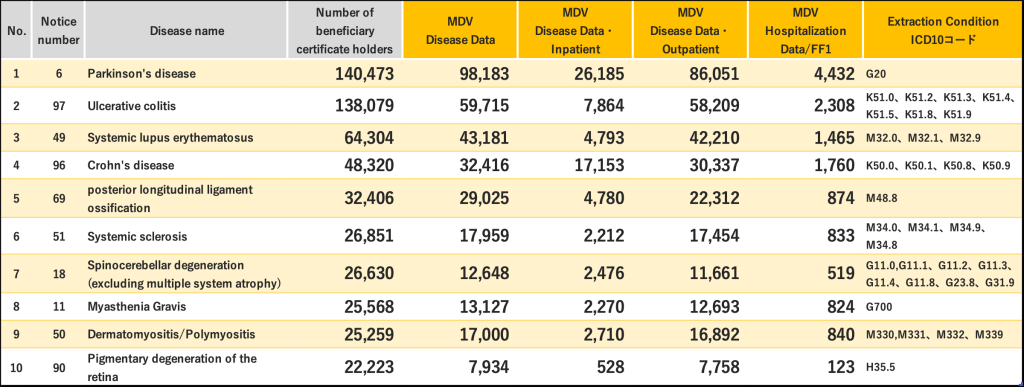
Furthermore, among the aforementioned, we compared the ratios of the number of beneficiary certificate holders for specific disease treatment, disease name data from MDV (overall), and hospitalization data (FF1) for some representative intractable diseases (Parkinson’s disease, Crohn’s disease, posterior longitudinal ligament ossification) in terms of patient age distribution.
Comparison of the number of beneficiary certificate holders for specific disease treatment (designated intractable diseases) and the age distribution ratio in MDV data (disease name data and data at the time of hospitalization) for each disease.
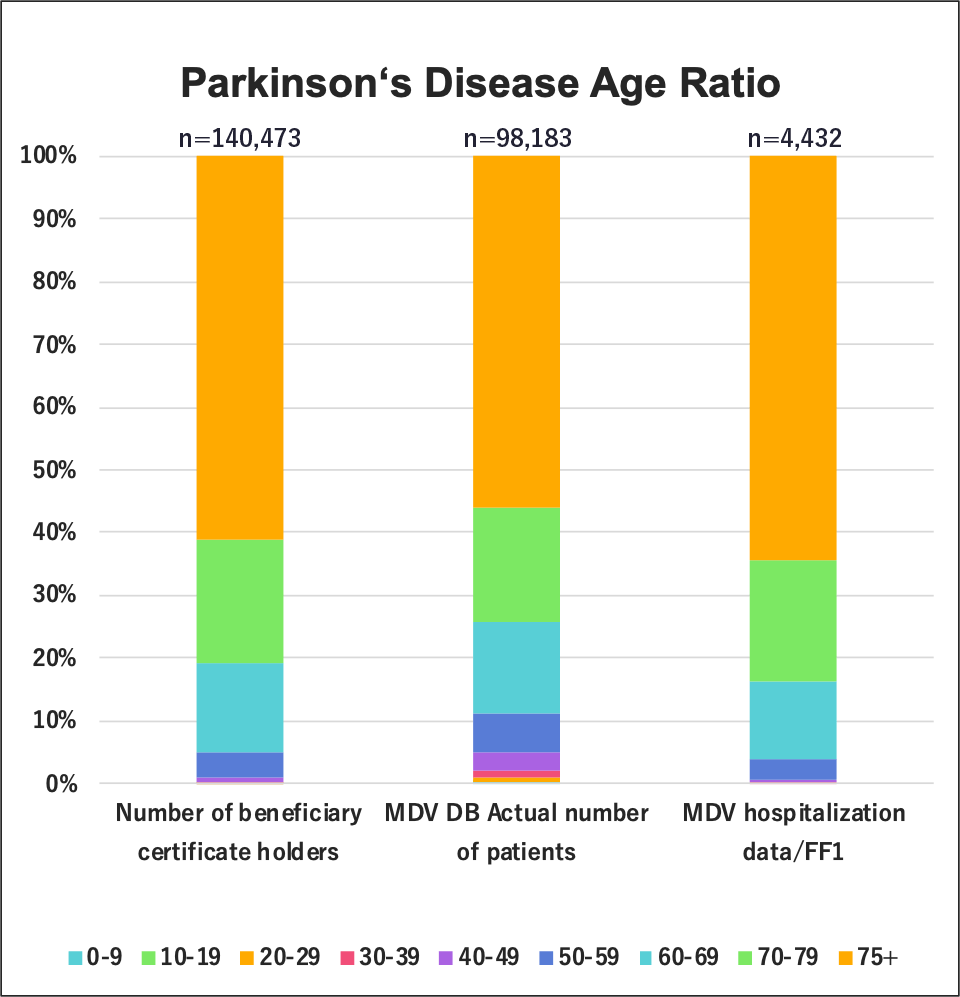
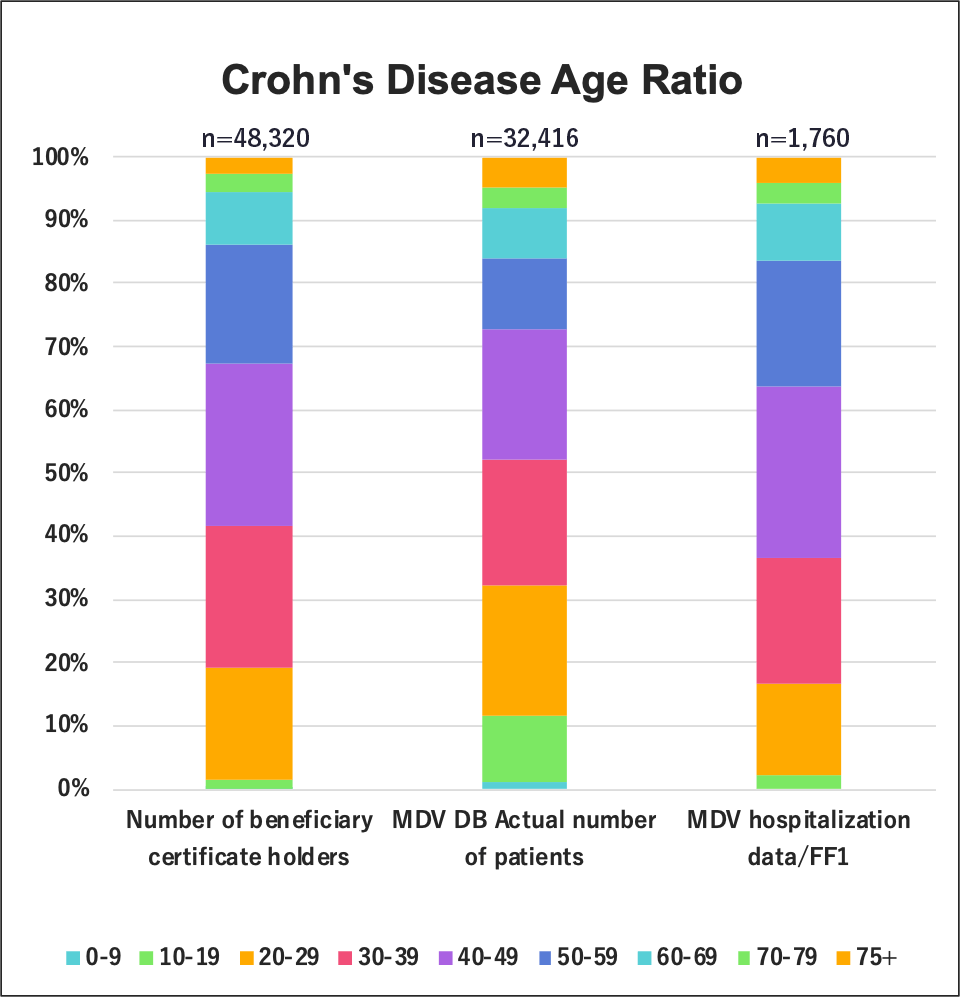
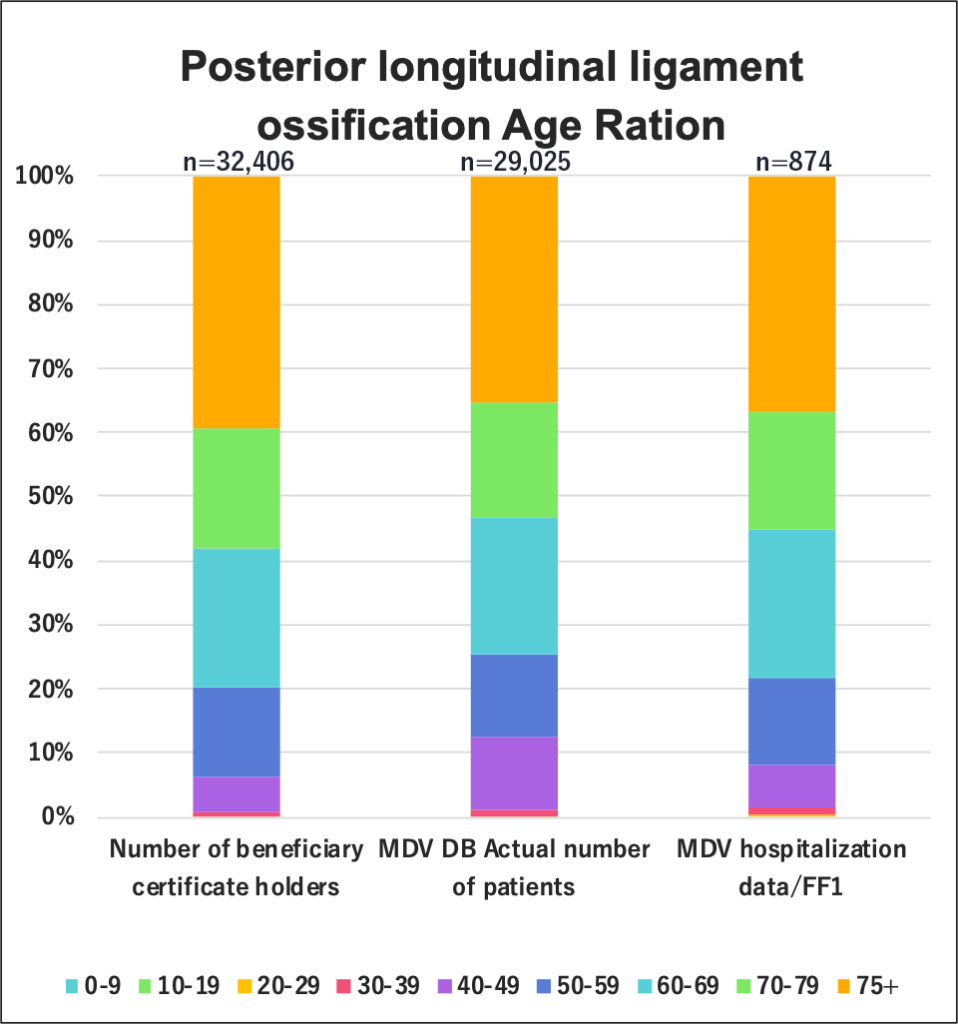
As a result, the age distribution ratios for each disease were also found to be generally similar.
Note: This article was published on October 1, 2023.

Data survey and analysis tailored to your specific requests
Databases, data analysis requests, and more.

© Medical Data Vision Co., Ltd. All Rights Reserved.