




Patient Trends and Evolution of Treatment Strategies in Multiple Sclerosis: A Shift Toward Early High-Efficacy Treatment
Multiple sclerosis (MS) is an inflammatory demyelinating disease considered to involve autoimmune mechanisms. Inflammation affecting the brain, spinal cord, and optic nerves can result in a wide range of symptoms, including visual impairment and motor dysfunction. Most patients experience a relapsing-remitting disease course characterized by repeated relapses and remissions, while patients with primary progressive MS follow a progressive course from disease onset.
In Japan, MS is designated as an intractable disease under the Specified Disease Treatment Research Program (Designated Intractable Disease No. 13) and is recognized as a condition that can significantly impair the quality of life (QOL) of young adults.
May 30 is recognized as World MS Day. In conjunction with the increased public awareness surrounding this occasion, this report summarizes recent changes in treatment trends.
In addition to the conventional escalation approach, recent years have seen increasing emphasis on early high-efficacy treatment for patients with poor prognostic factors. Accordingly, using MDV’s DPC data and MDV analyzer for Clinical Insight, we analyzed trends in patient numbers, utilization patterns of disease-modifying drugs (DMDs), and patient journey analyses to examine changes in treatment strategies in real-world clinical practice.
1. Trends in the Number of Multiple Sclerosis Patients (by Gender)
First, we examined trends in the number of patients with MS by gender.
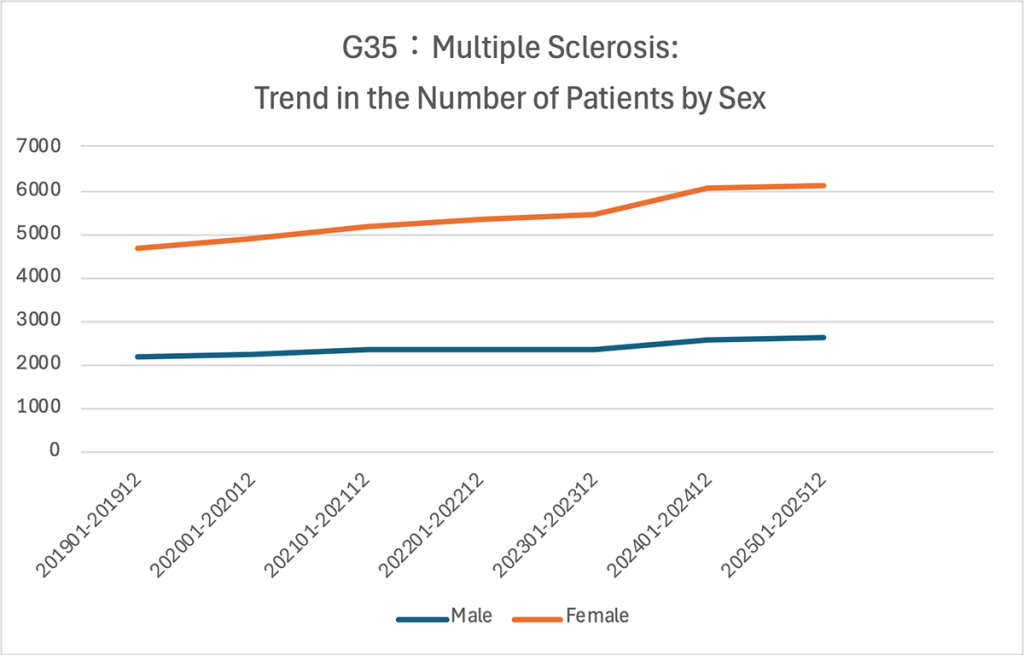
Period: January 2019 – December 2025 (data extraction reference date: April 2026)
Trend:
The number of patients showed a steady increase in both males and females. Among female patients, the number increased from the upper 4,000 range in 2019 to more than 6,000 by 2025. Among male patients, the number increased from slightly over 2,000 to approximately 2,600 during the same period.
2. Trends in the Use of Disease-Modifying Drugs (DMDs)
Next, we analyzed trends in the number of patients treated with individual DMDs, which constitute the cornerstone of MS treatment.
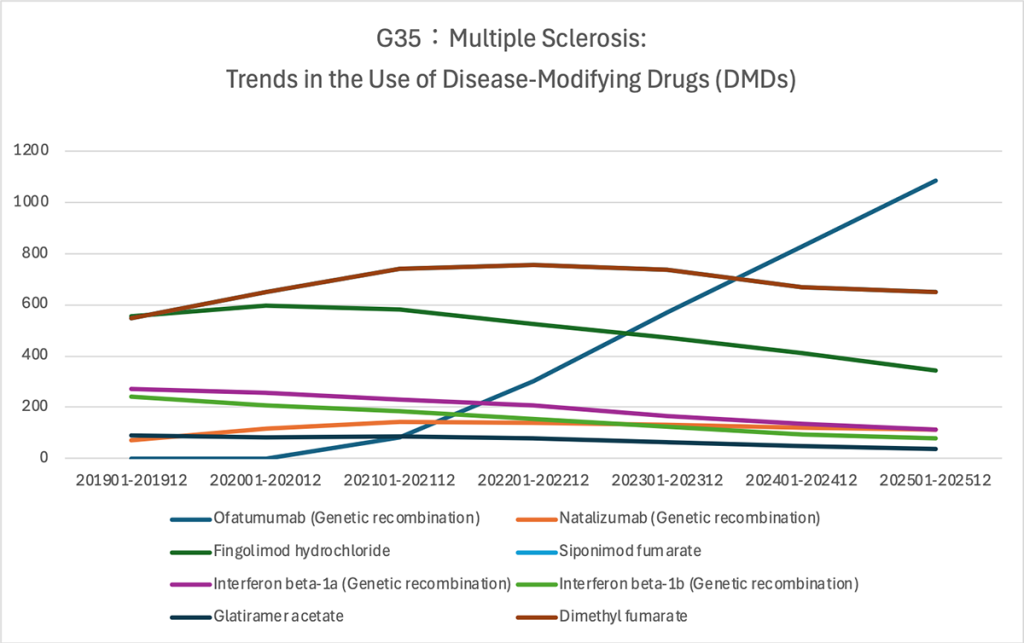
• Period: January 2019 – December 2025 (data extraction reference date: April 2026)
Trend:
Fingolimod hydrochloride, interferon beta products, and dimethyl fumarate, which had long been major treatment options, have shown stable or declining trends since 2021. In contrast, ofatumumab (recombinant), approved in 2021, demonstrated rapid growth immediately after launch and exceeded 1,000 treated patients by 2025.
Interpretation:
These results suggest that treatment selection may be shifting toward highly efficacious therapies in recent years. Increased use of ofatumumab may reflect both switching from existing therapies and its adoption as an initial treatment option.
3. Time from Initial Confirmed Diagnosis to First Prescription
To assess changes in treatment initiation timing, we analyzed the number of days from confirmed diagnosis to first prescription.
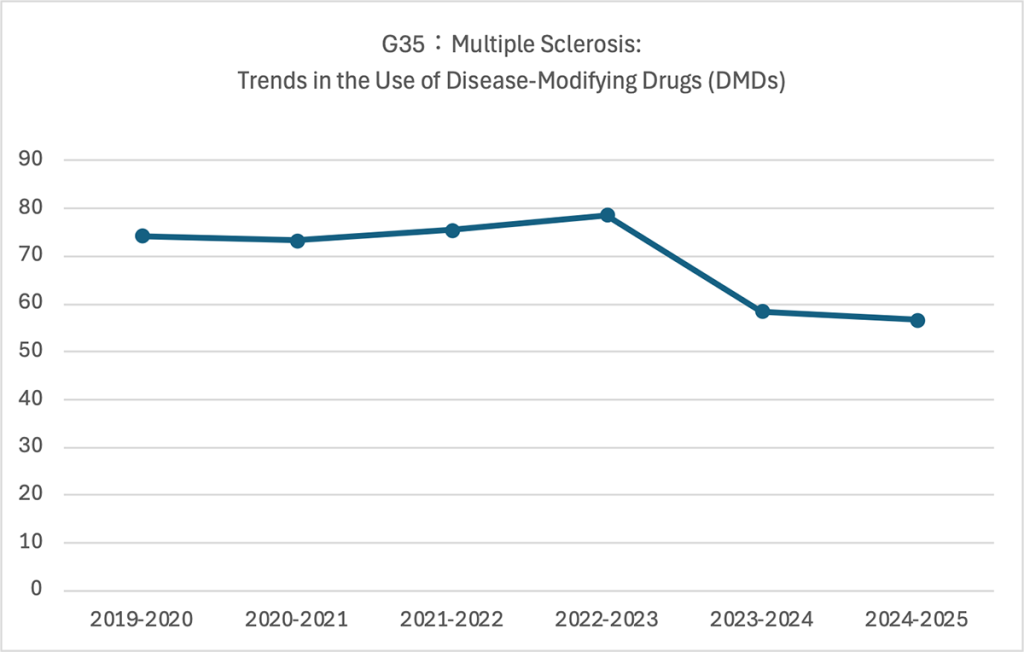
Period: January 2019 – December 2025 (data extraction reference date: April 2026)
Trend:
From 2019 to 2023, the interval remained generally stable at approximately 75 days. However, a shortening trend became apparent from the 2023–2024 period onward, declining to fewer than 60 days (in the high-50-day range) during the 2024–2025 period.
Interpretation:
These findings suggest that the time from diagnosis to treatment initiation has shortened in recent years. Possible contributing factors include increasing recognition of the importance of early therapeutic intervention and the expansion of available treatment options.
4. Patient Journey: Changes in Initial Treatment Selection
Finally, we analyzed the adoption of the recent treatment trend toward “early high-efficacy treatment” by comparing two periods: 2016–2020 and 2021–2025.
In this analysis, MS therapies were provisionally categorized into three groups—“low-efficacy,” “moderate-efficacy,” and “high-efficacy”—based on their generally recognized efficacy profiles for the purpose of evaluating trends in treatment selection. This classification is intended solely as a practical framework based on relative efficacy and does not represent a strict guideline-based definition.
Definition of Categories
Treatment Group A (Low-Efficacy Group)
A treatment group centered on conventional injectable therapies with relatively well-established safety profiles.
- 10306: Interferon beta-1a (recombinant)
- 10307: Interferon beta-1b (recombinant)
- 10828: Glatiramer acetate
Treatment Group B (Moderate-Efficacy Group)
A treatment group including oral agents expected to provide greater relapse suppression compared with conventional therapies.
- 12046: Fingolimod hydrochloride
- 12088: Dimethyl fumarate
- 12959: Siponimod fumarate
Treatment Group C (High-Efficacy Group)
A treatment group with high efficacy, assumed to be used for patients with highly active disease or as part of an early high-efficacy treatment strategy.
- 10558: Ofatumumab (recombinant)
- 11728: Natalizumab (recombinant)
[2016–2020]
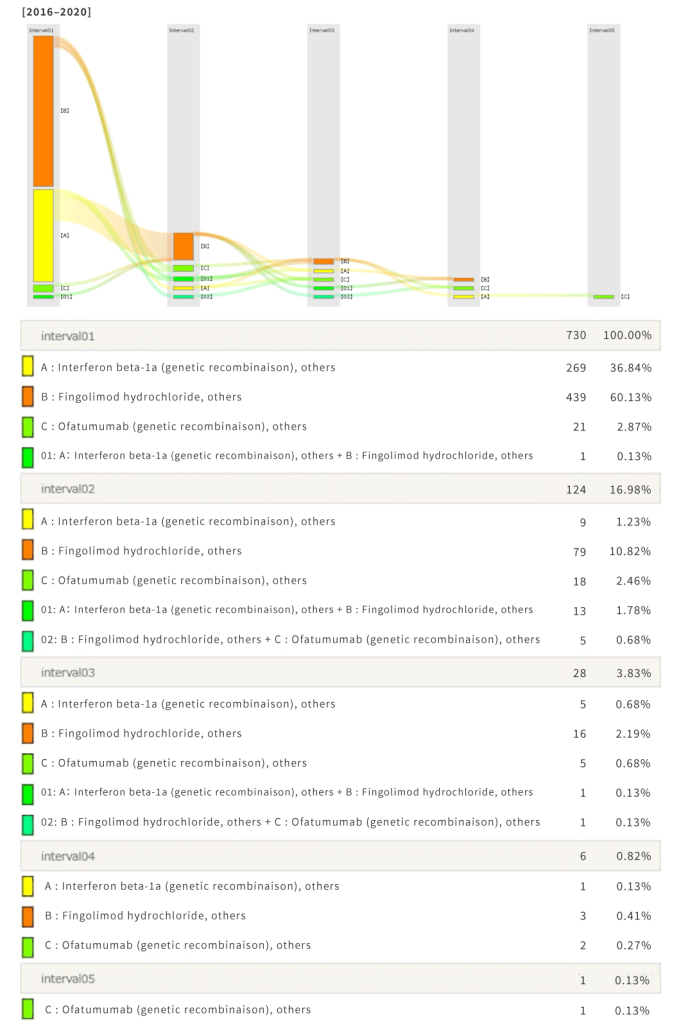
- Initial treatment (interval01)
Treatment Group B accounted for the majority at 60.13% (439 patients), followed by Treatment Group A at 36.84% (269 patients). - Transition to second-line treatment (interval02)
Among the 730 patients who received initial treatment in the DPC data from facilities included in this analysis, 16.98% (124 patients) transitioned to second-line treatment.
[2021–2025]
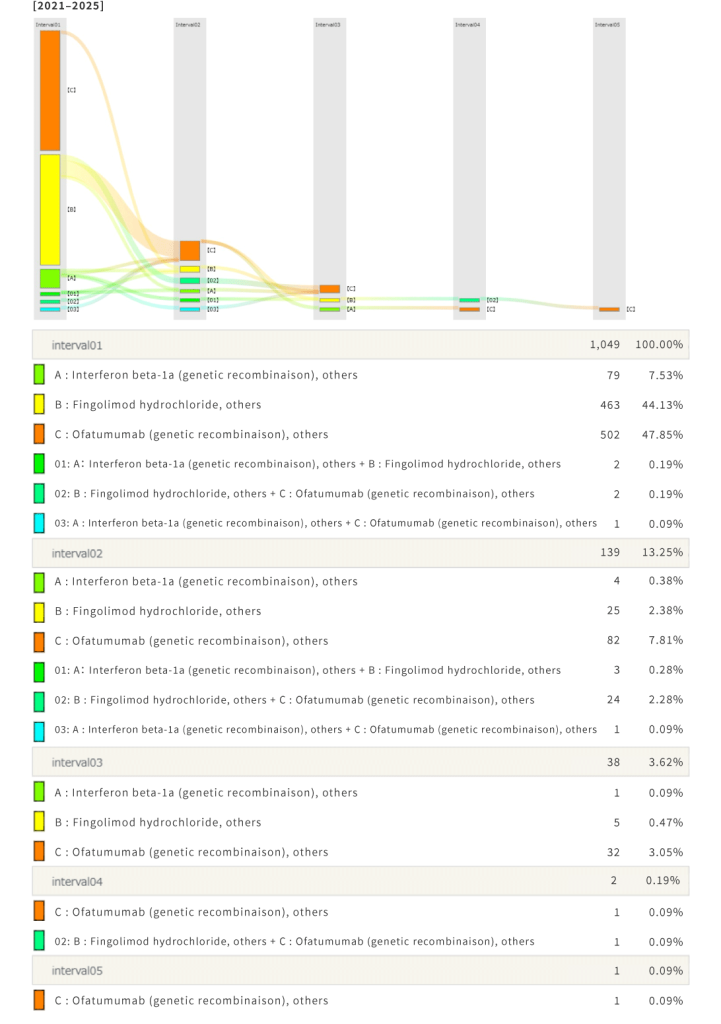
- Initial treatment (interval01)
A shift in treatment selection was observed, with Treatment Group C becoming the most frequently selected at 47.85% (502 patients). Treatment Group B (e.g., fingolimod) accounted for 44.13% (463 patients), while Treatment Group A (e.g., interferons) accounted for 7.53% (79 patients). - Changes in transition rates
Among the 1,049 patients receiving initial treatment in the DPC data from facilities included in this analysis, 13.25% (139 patients) transitioned to second-line treatment (interval02), while 3.62% (38 patients) progressed to third-line treatment (interval03).
Interpretation
This analysis confirmed an increasing proportion of patients receiving high-efficacy therapies as initial treatment in recent years. At the same time, a decline in transition rates between treatment lines was also observed. These findings may be consistent with the growing adoption of treatment strategies aimed at achieving high efficacy from the early stage of treatment.
Note: This article was published on May 1, 2026.

Data survey and analysis tailored to your specific requests
Databases, data analysis requests, and more.

© Medical Data Vision Co., Ltd. All Rights Reserved.