News
Analysis of Inpatient Numbers for Designated Intractable Diseases Shows Parkinson’s Disease and Ulcerative Colitis Among the Most Prevalent.
- February 20, 2026
Every year at the end of February, the international awareness day “Rare Disease Day (RDD)” is observed to promote understanding of rare and intractable diseases. Although the number of patients affected by these conditions is limited, many require long term treatment, making it essential to accurately understand patient population sizes based on real world clinical data when considering research and development as well as healthcare delivery systems.
In Japan, “designated intractable diseases” are conditions designated by the Minister of Health, Labour and Welfare based on criteria including unknown etiology, lack of established treatments, rarity, and the need for long term care. As of April 2025, a total of 348 diseases have been designated under this framework.
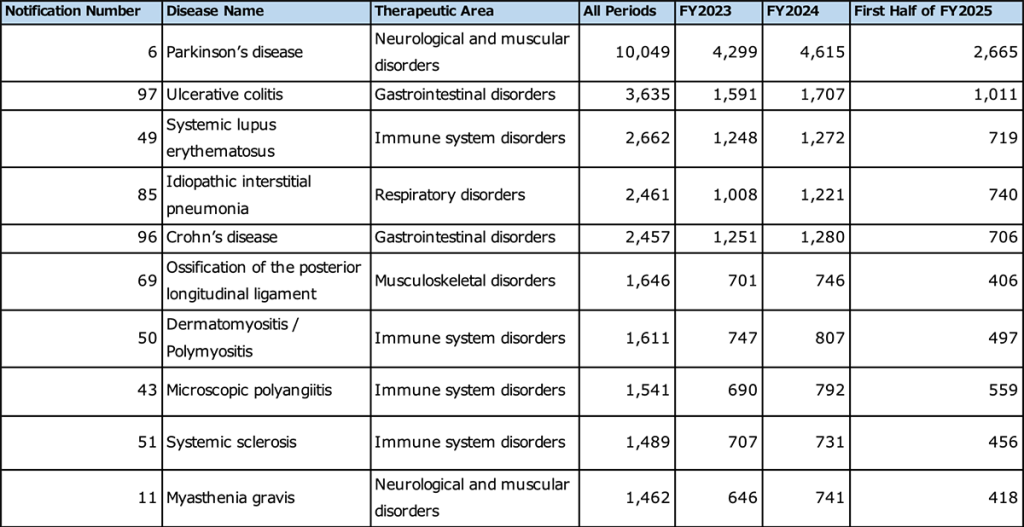
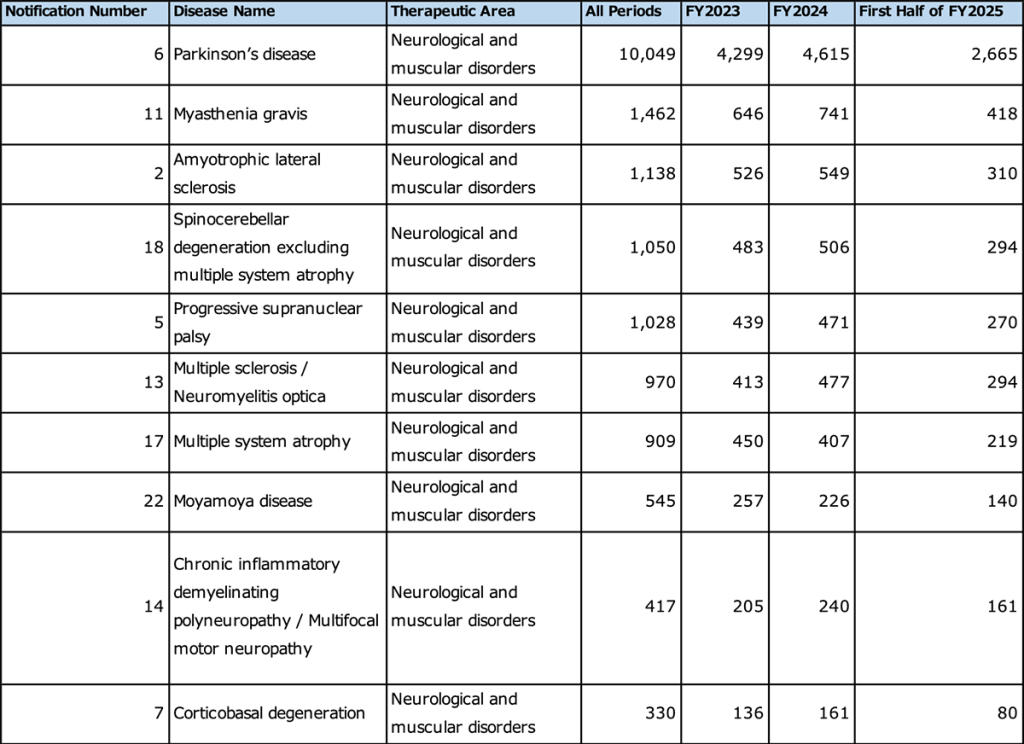
Against this backdrop, Medical Data Vision, which operates one of the largest medical databases in Japan, extracted designated intractable diseases based on the Ministry of Health, Labour and Welfare’s official “List of Designated Intractable Diseases and Clinical Survey Forms.” Using data from April 2023 onward, the company analyzed year by year trends in the number of hospitalized patients. The analysis summarizes the top 10 designated intractable diseases by inpatient volume (Table 1), as well as the top 10 diseases within the “neurological and neuromuscular disorders” category (Table 2) and the “immune system disorders” category (Table 3), based on inpatient numbers.
Top 10 Designated Intractable Diseases with the Highest Inpatient Volume (Table 1)
Top 10 Diseases in the “Neurological and Neuromuscular Disease” Category (Table 2)
Top 10 Diseases in the “Immunological Disease Area” (Table 3)
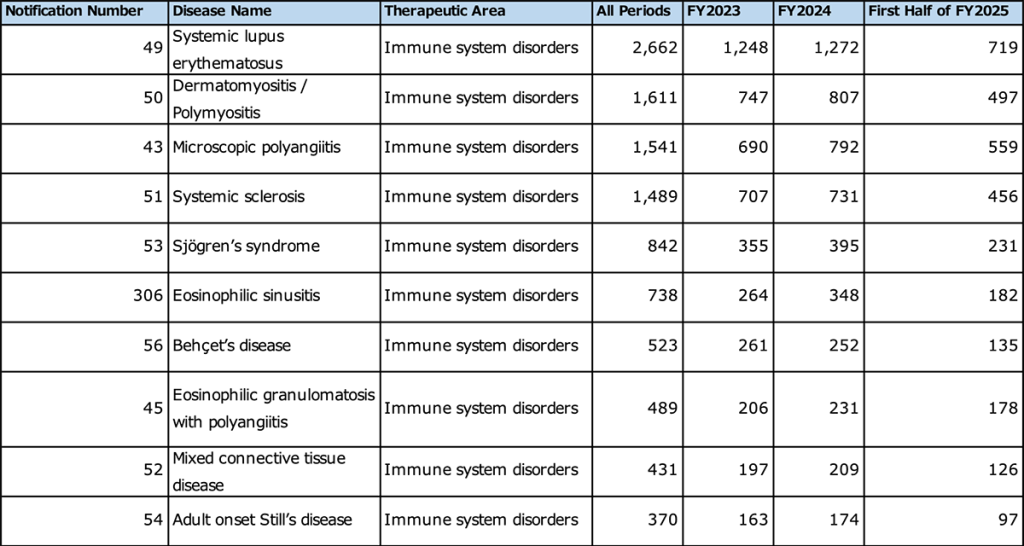
(Tables 1, 2, and 3) Study period: April 2023 to September 2025
Number of facilities included: 445
Reference
Ministry of Health, Labour and Welfare: “List of Designated Intractable Disease Names and Clinical Survey Individual Forms”
https://www.mhlw.go.jp/stf/newpage_53881.htmlPMDA (Pharmaceuticals and Medical Devices Agency, Japan): List of Approved New Drugs (FY 2023 and FY 2024)
https://www.pmda.go.jp/review-services/drug-reviews/review-information/p-drugs/0010.html
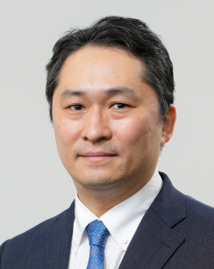
Physician’s Comment
Professor Taku Hatano
Department of Neurology, Juntendo University Faculty of Medicine
Director, Parkinson’s Disease Center, Juntendo Hospital
Parkinson’s disease, a neurological intractable disease, was first described in detail in 1817 by the British physician James Parkinson. The disease develops when abnormal protein aggregates, known as Lewy bodies, accumulate within nerve cells, leading to their dysfunction and degeneration. In particular, the loss of dopamine-producing neurons causes characteristic symptoms such as tremor of the limbs, bradykinesia (slowness of movement), muscle rigidity, and postural instability, which can result in falls.
The age of onset is most commonly between 60 and 70 years, with cases developing before the age of 50 being relatively rare. As such, Parkinson’s disease is considered an age-related condition whose prevalence increases with aging. In addition, some of its symptoms overlap with those of dementia, making diagnosis challenging in certain cases. Complicating matters further, dementia associated with Parkinson’s disease can closely resemble dementia with Lewy bodies, which may add to diagnostic difficulty.
Due to a lack of understanding about the disease, many patients feel significant anxiety when they are diagnosed with Parkinson’s disease. While a curative treatment has yet to be established, advances in medical care have made it possible to manage the condition effectively. Treatments include pharmacotherapy with levodopa (L-DOPA), which supplements depleted dopamine levels in the brain, deep brain stimulation, and rehabilitation. As a result, even when hospitalization is required, some patients are now able to return to independent daily living after approximately two weeks of treatment.