News
Medical Big Data Sheds Light on the Actual Conditions of Heatstroke Patients. MDV and Nissay Plus SSI Conduct Joint Survey
- June 10, 2026
Medical Data Vision Co., Ltd. (Chiyoda-ku, Tokyo; hereinafter “MDV”), a member of the Nippon Life Group, and Nissay Plus SSI Company Inc. (Chiyoda-ku, Tokyo; hereinafter “Nissay Plus SSI”), also a member of the same group, have compiled data on heatstroke based on MDV’s medical care database, one of the largest in Japan, and data held by Nissay Plus SSI.
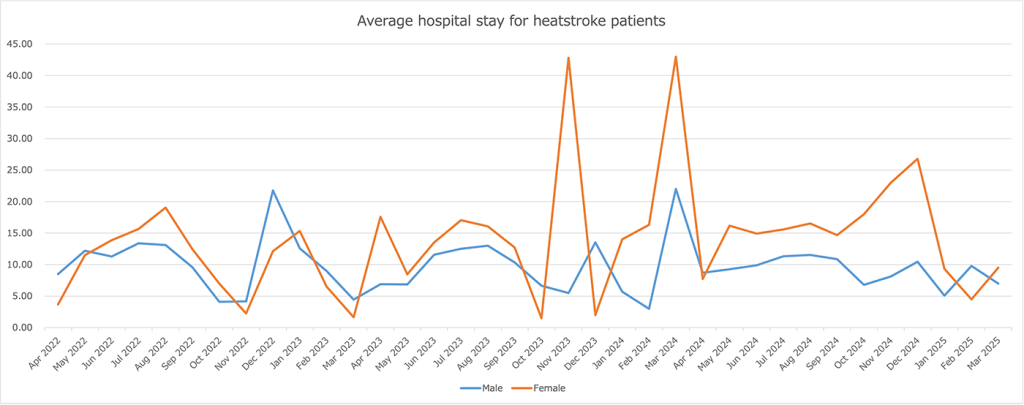
The analysis found that interest in heatstroke differs by region across Japan, as reflected in the number of insurance policy enrollments. It also showed that the male-to-female ratio among hospitalized heatstroke patients was approximately 6:4, while the length of hospital stay tended to be longer among female patients.
Heatstroke is a condition in which the body’s temperature regulation function fails in a hot and humid environment, causing heat to accumulate in the body. Major symptoms include dizziness, headache, and nausea, and severe cases can be life-threatening. The Fire and Disaster Management Agency of the Ministry of Internal Affairs and Communications also publishes data on heatstroke.
https://www.fdma.go.jp/disaster/heatstroke/post3.html
Male-to-Female Ratio Among Hospitalized Heatstroke Patients Was 6:4
Using MDV’s medical care database, one of the largest in Japan, which covered 61.21 million actual patients as of the end of April 2026, we examined patients hospitalized for heatstroke (*1) at 432 hospitals where data could be continuously obtained over the 36-month period from April 2022 to March 2025.
The number of hospitalized patients was 11,895. By 10-year age group, patients aged 80 to 89 accounted for 3,861 patients, representing more than 30% of the total, followed by patients aged 70 to 79, with 2,651 patients, representing more than 20%.
By gender, there were 7,348 male patients and 4,547 female patients, corresponding to a male-to-female ratio of approximately 6:4. However, the analysis also showed that the length of hospital stay tended to be longer among female patients. In addition, by season, a notable number of patients required longer hospitalization even in November, from late autumn to early winter.
*1: “Hospitalization for heatstroke” was defined as cases in which heatstroke was recorded as the diagnosis consuming the greatest amount of medical resources, the principal diagnosis, or the diagnosis triggering hospitalization.
Among comorbidities observed in patients hospitalized for heatstroke, “COVID-19” ranked high after “volume depletion.” Disease aggregation was performed using ICD-10, the International Statistical Classification of Diseases and Related Health Problems, developed by the World Health Organization (WHO).
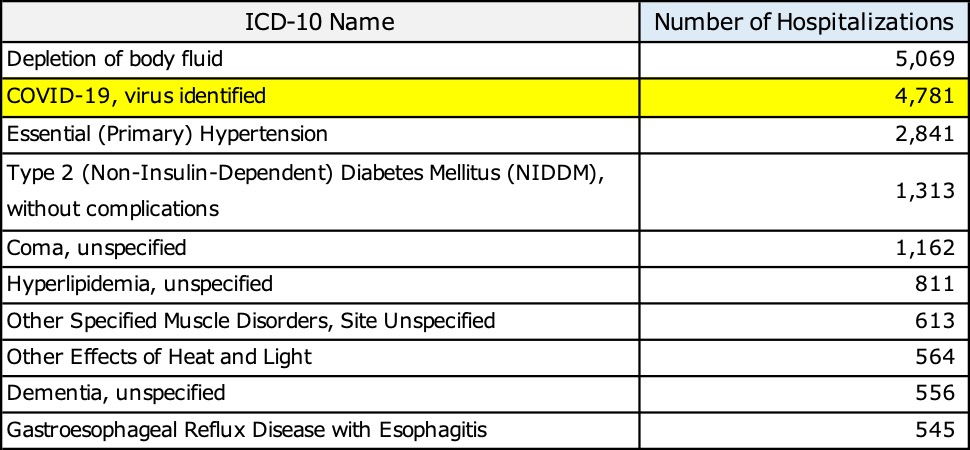
At the same time, however, it was also found that most of the COVID-19 cases were ultimately recorded as “suspected diagnoses” (*2). This suggests that emergency medical personnel, who are often the first to come into contact with patients during transport, may have faced difficulty in determining whether the patient’s condition was heatstroke or COVID-19 when deciding the appropriate receiving hospital.
*2: Used as a basis for conducting blood tests or diagnostic imaging.
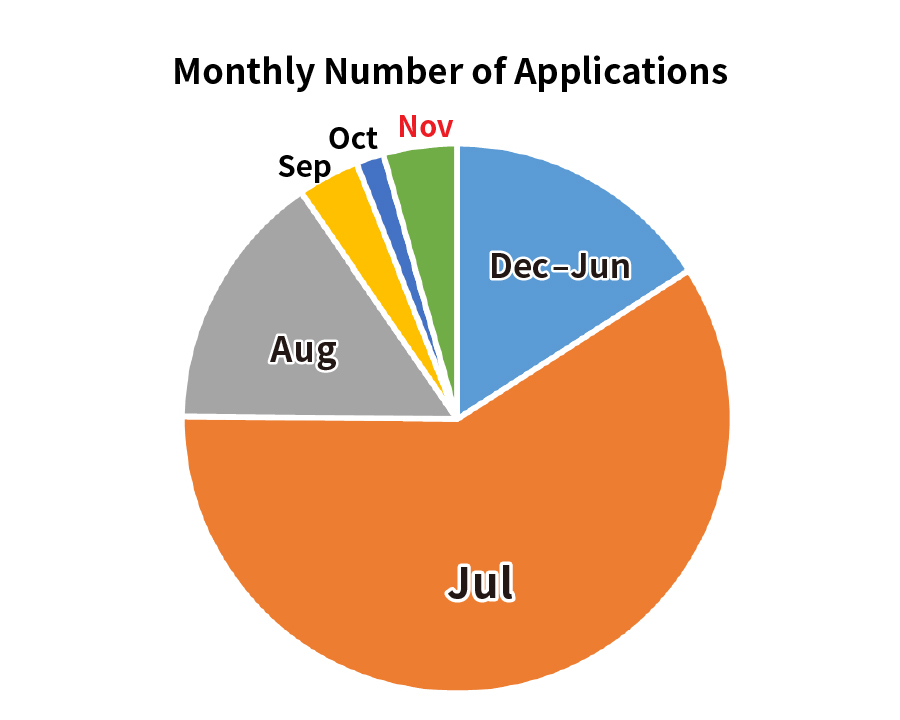
Meanwhile, looking at the monthly composition of applications over approximately two years since the launch of heatstroke insurance offered by Nissay Plus SSI, July accounted for the largest share at 59%, followed by August at 15% and September at 4%. This trend was broadly in line with the monthly status of emergency transport due to heatstroke published by the Fire and Disaster Management Agency.
The share of applications in November, when a notable number of patients were found to require long-term hospitalization, was 4%, suggesting that the relationship between long-term hospitalization and the month of insurance application may be limited.
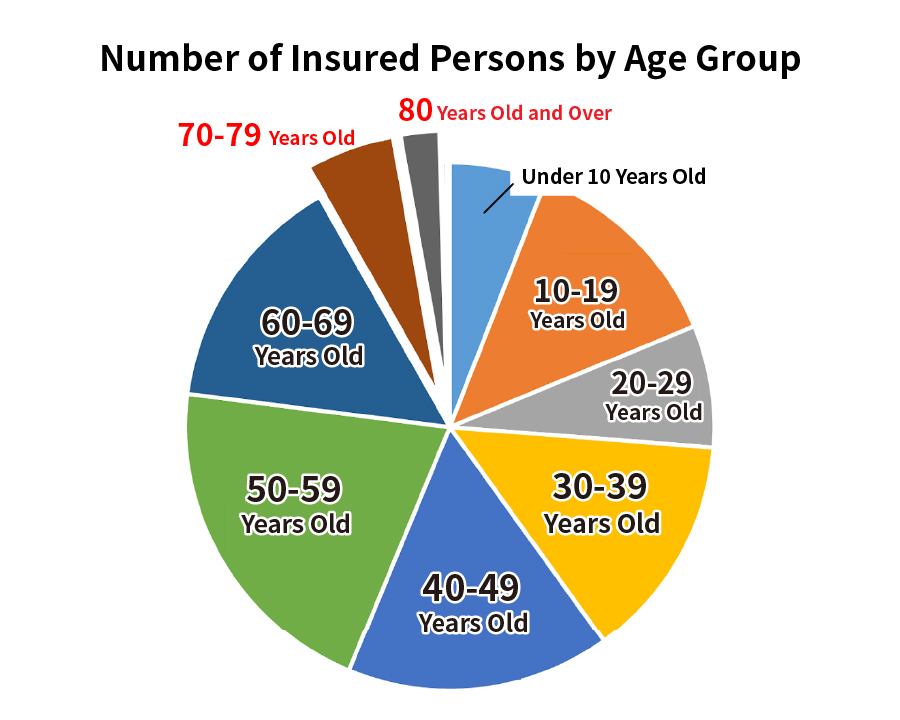
Similarly, while patients aged 70 years and older accounted for more than 50% of hospitalized heatstroke patients, the proportion of insured persons aged 70 and older under heatstroke insurance was only 7% of the total. This also revealed a substantial gap.
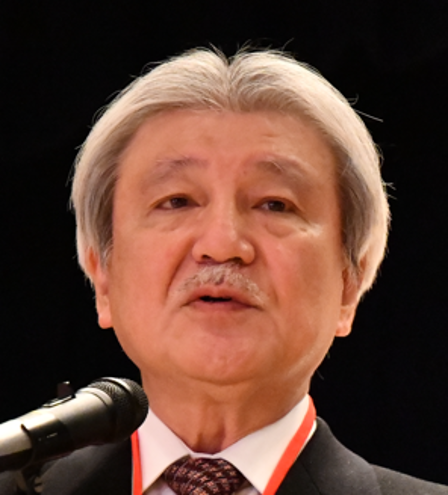
Physician Comment
Masashi Ito, MD
Chairman and Hospital Director
Tojun Hospital, Jiseikai Social Medical Corporation Association
Emergency admissions for heatstroke patients begin around June. In households where elderly people care for other elderly family members, as well as among elderly people living alone, patients may be hospitalized for heatstroke. Because of their advanced age, complications such as aspiration pneumonia or urinary tract infections may prolong the length of hospitalization.
As people age, their sensitivity to body temperature decreases, and they may no longer perceive heat as easily. As a result, even when their own body temperature rises, they may not adjust the indoor temperature, which can ultimately lead to heatstroke. In home medical care, there are even cases where patients are using heating during the summer.
Transfers from elderly care facilities are also increasing. Even when facility staff speak to residents, some patients say they are fine or do not report symptoms. As a result, early signs of heatstroke may be overlooked, leading to worsening of the condition and subsequent hospitalization. In recent years, hot days have continued into the autumn, and physical condition may also deteriorate during seasonal transitions. Therefore, caution is required even after the summer period.
As people age, they tend to become less inclined to drink water. To help prevent heatstroke, we advise elderly patients who visit or are admitted to our hospital not to wait until they feel thirsty before drinking water, but rather to drink water at fixed times, as if it were medicine.
Regional Characteristics Observed Among Heatstroke Insurance Policyholders
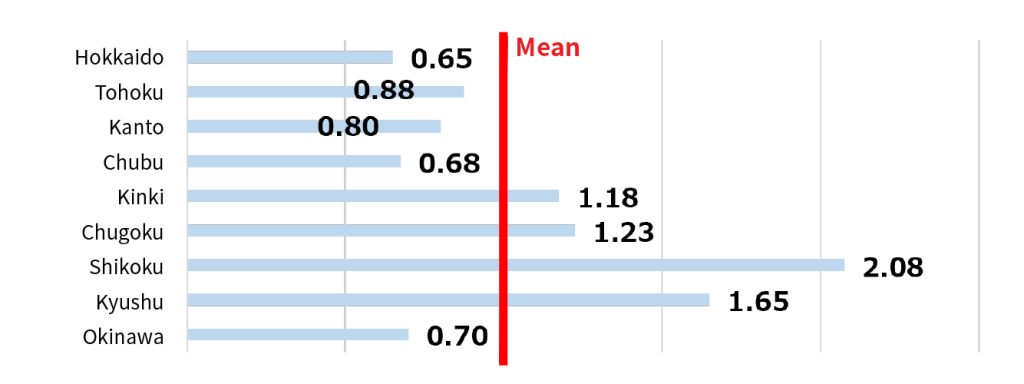
Furthermore, when heatstroke insurance policyholders were analyzed by region, regional characteristics were observed. When the average enrollment rate per population was set at 1, the coefficient tended to be higher in western Japan. One possible background factor is that western Japan includes warmer regions, where a relatively larger number of people may be preparing for heatstroke risk. At the same time, given rising temperatures across Japan and recent climate change, Nissay Plus SSI will continue communicating the need for heatstroke insurance to people in eastern Japan as well.
Nissay Plus SSI “Heatstroke and Influenza Insurance” product page
Access the website via the 2D barcode or the banner below. (Available in Japanese only)

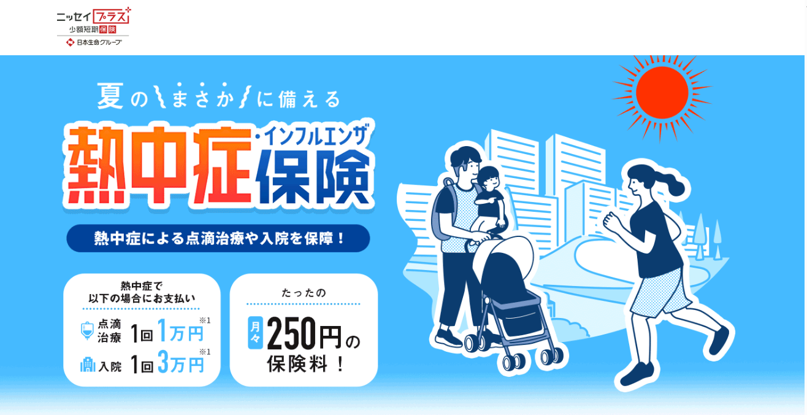
Nissay Plus SSI will continue to advance its initiatives by drawing on insights obtained from big data analysis held by Nippon Life Group companies, as well as changes in the external environment, in order to provide carefully tailored insurance coverage that meets the needs of customers and partner companies.